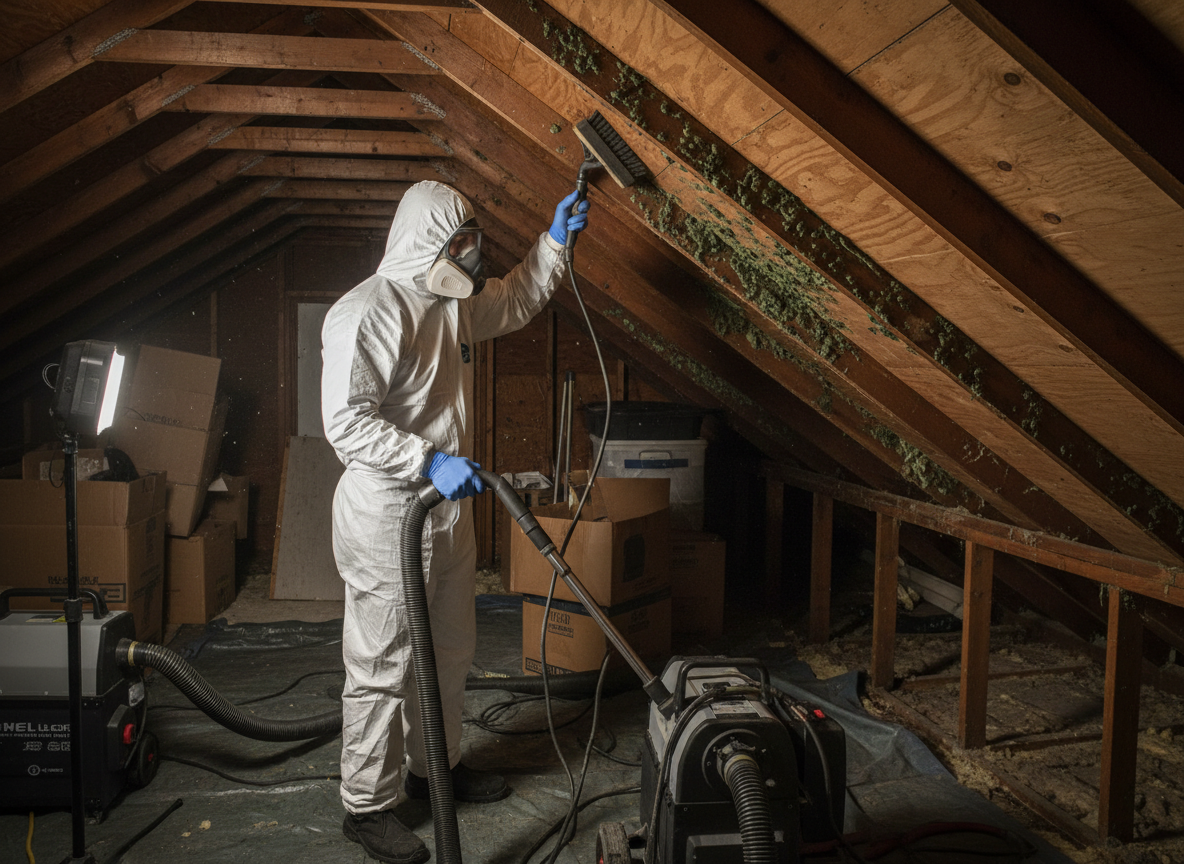
Downey’s older housing stock, especially pre-1970 homes near Rancho Los Amigos and along Lakewood Boulevard, often features limited attic ventilation and original roof decking that traps moisture after even modest winter rains. Once water from a roof leak or overflowing gutter reaches insulation or rafters, mold colonies form quickly in the mild Mediterranean winters when temperatures stay above 50 degrees. Technicians must remove affected cellulose or fiberglass insulation without disturbing asbestos-containing materials common in that era, then treat exposed wood with EPA-registered antimicrobials before reinstalling new insulation rated for the area’s hot summer heat gain.
Access in these single-story and low-pitch-roof homes frequently requires cutting inspection ports through drywall ceilings rather than relying on pull-down stairs that are often too narrow. Containment becomes critical because spores can migrate into living spaces through recessed lighting cans and HVAC returns that many Downey homes still have in attic spaces. After removal, negative-air machines run for 48–72 hours while moisture meters confirm rafter and sheathing dryness below 12 percent before any new materials are installed.
Edge cases include mold hidden behind radiant-barrier paper installed in the 1990s remodels common near the Rio Hondo Golf Club and Columbia Memorial Space Center. Homeowners in Norwalk, Bell Gardens, and Paramount often discover the problem only after musty odors reach second-floor bedrooms during the first hot spell of summer. Proper documentation of moisture mapping and photo evidence before and after is required for insurance claims typical in Los Angeles County.
Code compliance in Downey follows Los Angeles County guidelines on disposal of mold-contaminated materials and requires permits when more than 10 square feet of drywall is opened. Skipping these steps can delay resale inspections or trigger additional city requirements.
Technician insight
In Downey, the thing that catches most people out with Attic Mold Remediation is the combination of low-pitch roofs on 1950s–60s homes near Rancho Los Amigos and the way summer heat builds up under radiant barriers, hiding active moisture until the first big rain pushes it into living spaces.
Hidden Leak Behind Radiant Barrier
A homeowner in a 1962 Downey house near the Rio Hondo Golf Club noticed musty smells in upstairs bedrooms after winter rains. Inspection revealed water tracking along rafters behind 1990s radiant-barrier paper that had trapped moisture against the sheathing. We opened limited ceiling access, removed the wet insulation and paper, treated the rafters, and added ridge venting before reinstalling new insulation. Odors cleared and moisture stayed below 12 percent through the following summer.
How it works
- 1
Initial Inspection
Moisture mapping and thermal imaging of the attic from access points in Downey homes to locate all water-damaged zones.
- 2
Containment Setup
Plastic barriers and negative-air machines isolate the attic to prevent spore migration into living areas.
- 3
Removal and Treatment
Extraction of affected insulation and wood treatment with EPA-registered products followed by HEPA vacuuming.
- 4
Drying and Verification
Forced-air drying until moisture readings drop below 12 percent, then clearance testing before insulation replacement.
- 5
Prevention Recommendations
Installation of additional ridge or soffit vents and gutter adjustments suited to Downey’s rainfall patterns.
Pricing
Cost depends on attic size, extent of insulation removal, and whether drywall ceilings must be opened for access in older Downey homes.