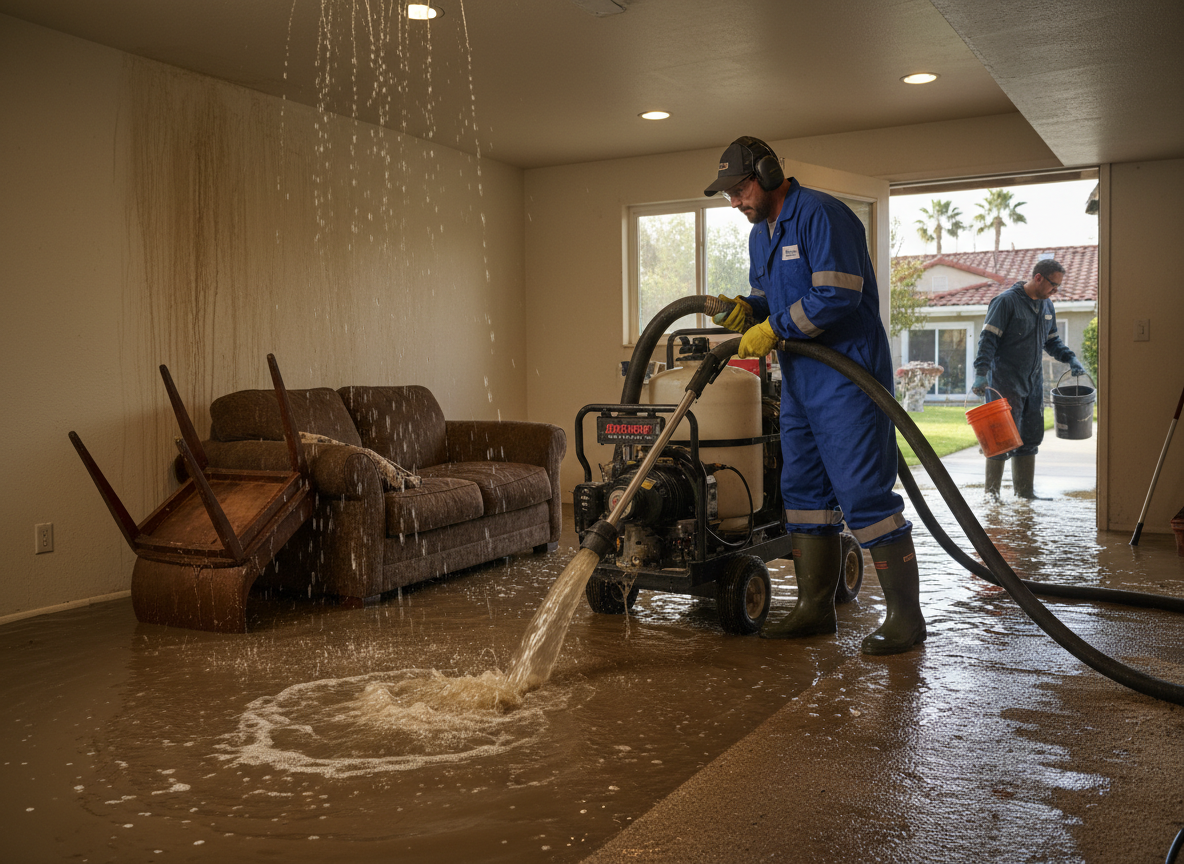
Emergency water removal in Downey often begins with properties built on slab foundations from the 1950s and 1960s that sit close to the water table near Rancho Los Amigos. When a supply line fails or winter rains overwhelm drainage, water travels under the slab and into adjacent walls faster than in newer construction. Technicians must locate the migration path with moisture meters before extraction to avoid leaving pockets that later cause drywall failure or musty odors in living spaces.
Mediterranean climate patterns bring concentrated winter rainfall after long dry summers, which saturates soil around older homes in Paramount and Bell Gardens and increases hydrostatic pressure against foundations. Portable extraction units with high-volume pumps are staged at the 12118 Lakewood Blvd shop so crews can reach jobs in Norwalk or central Downey within the first hour. Removing standing water quickly is critical because the mild temperatures slow natural evaporation, allowing moisture to linger in subflooring and carpet padding.
After bulk water is pulled, crews focus on hidden cavities around plumbing chases and under cabinets common in Downey ranch-style houses. Air movers and dehumidifiers are positioned to create directed airflow that accounts for the dense stucco exteriors that trap humidity. Homeowners are advised to move furniture away from baseboards immediately because residual moisture can wick upward and stain wood trim that is difficult to replace in period homes near the Downey Civic Theater.
Technician insight
In Downey, the thing that catches most people out with Emergency Water Removal is how fast water travels under the post-war slab foundations during our mild winter rains, especially in homes near Rancho Los Amigos where the soil stays saturated longer than people expect.
Slab leak after winter rain in central Downey
A homeowner near the Downey Civic Theater reported water appearing along baseboards after a supply line failed during a storm. Crews found migration under the slab extending into two bedrooms. Extraction units pulled the water, drying equipment ran for four days, and the home returned to normal moisture readings without drywall removal.
How it works
- 1
Initial Assessment
Technicians arrive from the Lakewood Boulevard base and map water migration using meters while checking slab edges and wall cavities typical of Downey housing stock.
- 2
Water Extraction
High-capacity pumps and wands remove standing water from floors and low areas before it reaches neighboring units in multi-family buildings common near Rio Hondo Golf Club.
- 3
Drying and Monitoring
Equipment is placed to pull moisture from subfloors and walls; daily readings track progress through the mild winter conditions that slow evaporation.
- 4
Final Verification
Moisture levels are confirmed dry to manufacturer standards and affected materials are documented before the job is released back to the homeowner.
Pricing
Pricing varies with water volume, access under slabs, and number of affected rooms in older Downey homes.