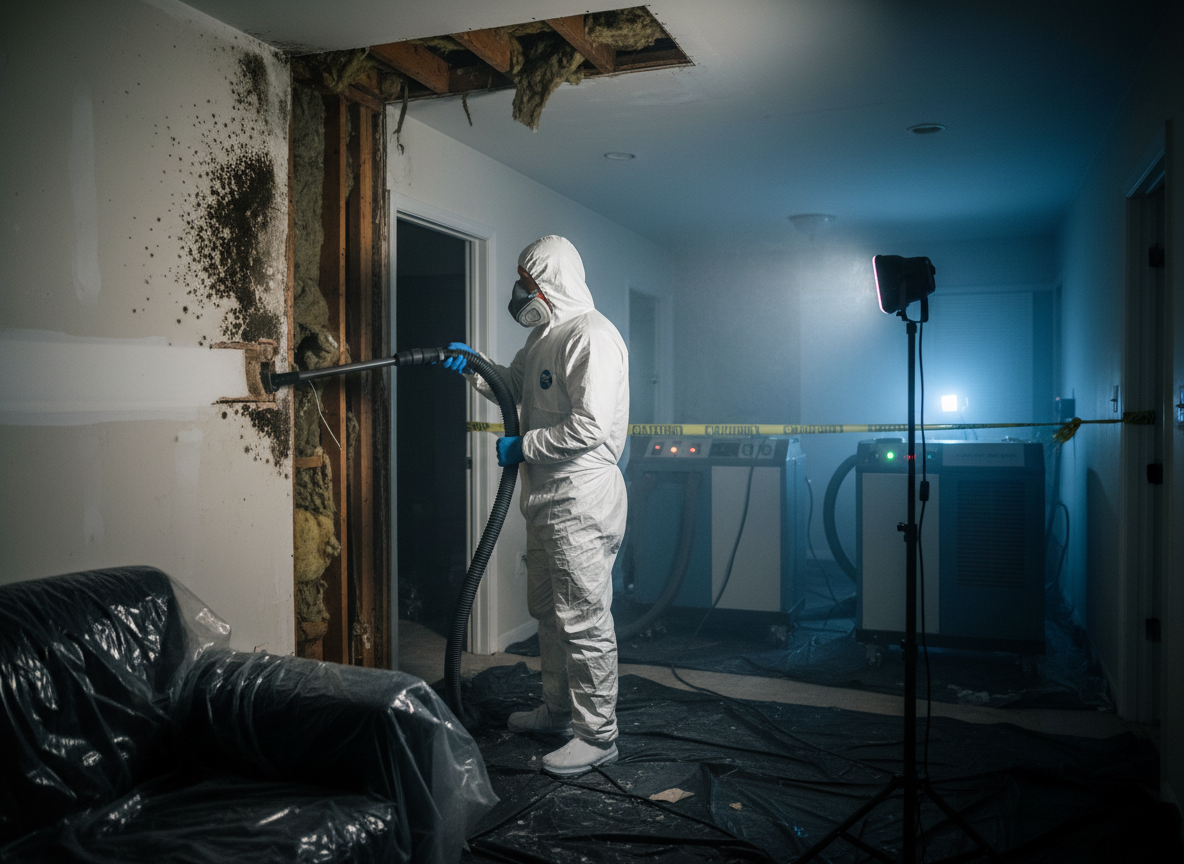
Downey's mid-century housing stock often features plaster-over-lath walls and shallow crawl spaces that trap moisture after leaks from aging galvanized lines. When summer heat pushes indoor humidity above 60 percent, mold colonies can establish in 48 hours on cellulose materials behind baseboards. Remediation requires negative-pressure containment and HEPA air scrubbing before any drywall removal to keep spores from migrating into living spaces shared with neighbors in Bell Gardens or Paramount.
Mild winters keep soil moisture elevated along the Rio Hondo corridor, so slab-edge leaks frequently wick upward into carpet pads and subflooring near the Columbia Memorial Space Center area. We map moisture with thermal imaging and pin meters rather than relying on visual signs alone, because hidden saturation in particleboard cabinets or HVAC ducts can re-contaminate treated rooms within weeks if not addressed.
Los Angeles County code requires documentation of moisture source correction before final clearance testing. Homeowners in Rancho Los Amigos often discover that insurance adjusters will not release funds until we provide photos of removed wet insulation and post-remediation spore counts below outdoor baselines. Skipping this step leaves properties vulnerable to recurrent growth during the next hot spell.
Technician insight
In Downey, the thing that catches most people out with Mold Remediation After Water Damage is moisture trapped behind original plaster in 1950s homes near Rancho Los Amigos where the mild winters keep the ground damp and allow colonies to regrow weeks after initial drying.
Hidden Crawl-Space Growth After Roof Leak
Water from a wind-driven rain event entered an attic near Rio Hondo Golf Club and wicked down into bedroom walls. We found elevated moisture in the crawl space that had gone unnoticed for ten days. After containment, removal of wet insulation, and targeted drying, clearance samples passed and the family returned without further issues.
How it works
- 1
Moisture Mapping
We use thermal cameras and moisture meters to locate all affected materials in walls, floors, and ceilings without guesswork.
- 2
Containment Setup
Plastic barriers and negative air machines isolate the work zone so spores do not spread to unaffected rooms.
- 3
Material Removal
Saturated drywall, insulation, and trim are cut out and bagged for disposal following IICRC protocols.
- 4
Drying and Verification
Commercial dehumidifiers and air movers run until readings reach normal levels, then clearance testing confirms safe spore counts.
Pricing
Upfront quotes after inspection reflect the square footage, depth of hidden moisture, and any required clearance testing.