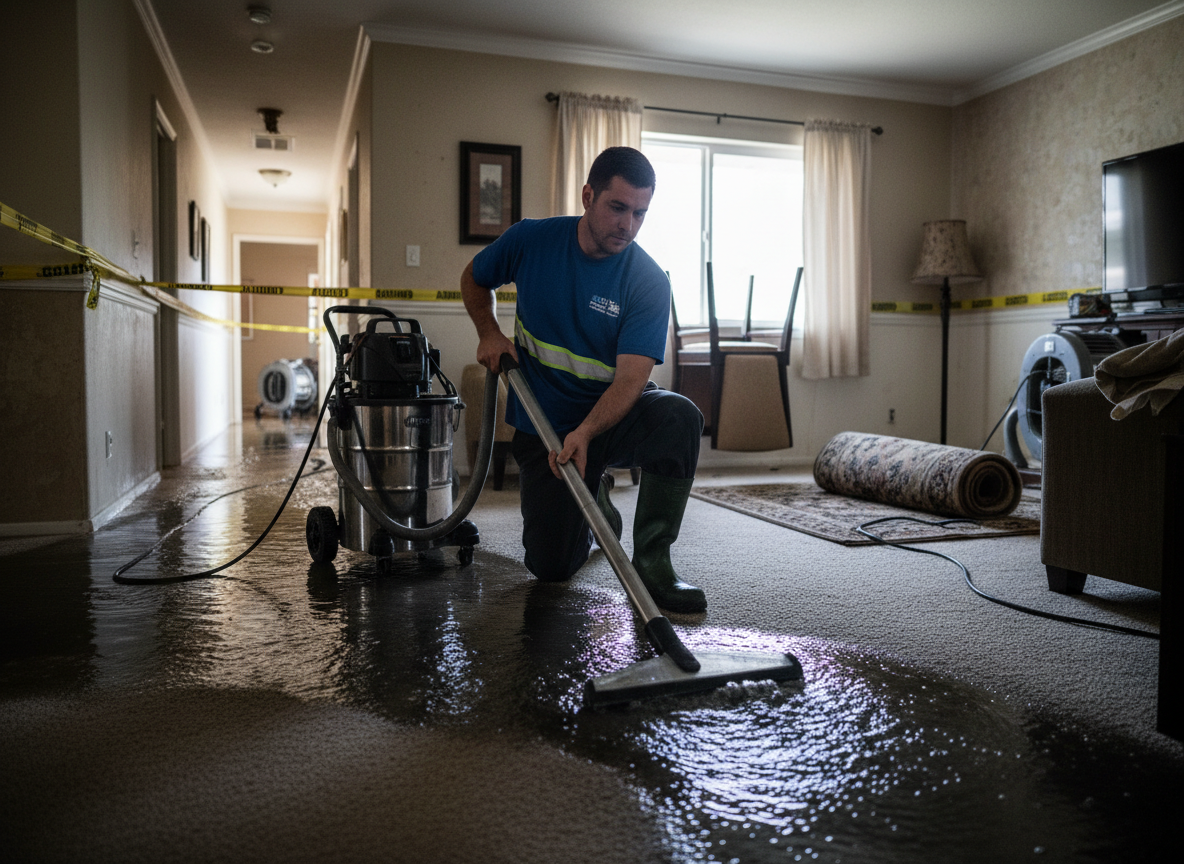
Downey's older housing stock, especially single-family homes built before 1970 near the Columbia Memorial Space Center, often features slab-on-grade foundations and narrow crawl spaces that allow water to migrate under floors during even moderate winter rains. Mediterranean climate patterns mean sudden downpours can overwhelm aging drainage around properties close to the Rio Hondo channel, turning small leaks into extraction jobs that require subfloor access points most homeowners do not expect. Industrial-grade pumps and moisture meters become essential because trapped water in these slabs leads to hidden mold growth within 48 hours if not fully removed.
In neighborhoods bordering Norwalk and Paramount, water extraction frequently involves multi-story apartments where gravity pulls moisture through shared walls and into lower units. Technicians must map the entire water path rather than stopping at the visible puddle, because Los Angeles County building codes require documentation of affected materials before any reconstruction can begin. Failure to extract water from behind baseboards or under vinyl flooring in these buildings commonly results in callbacks weeks later when residents report musty odors.
Hot summer months increase the risk of appliance-related floods from swamp coolers and older water heaters common in Bell Gardens-adjacent blocks. Extraction crews carry portable generators because power is often shut off at the main for safety, and they document every step with photos to satisfy insurance adjusters who know Downey's soil conditions can shift slightly after repeated saturation.
Technician insight
In Downey, the thing that catches most people out with Water Extraction Company is the older slab foundations around Rancho Los Amigos that let water travel under the entire house during mild winter rains; homeowners often stop once the floor looks dry, but the moisture stays trapped until we pull baseboards and run targeted drying.
Kitchen Leak in Downey Home Near Rio Hondo Golf Club
A dishwasher supply line failed overnight in a 1960s ranch house. Water migrated under the slab and into the adjacent hallway. Extraction crews removed the standing water, opened the toe-kick areas, and ran drying equipment for three days until meter readings matched unaffected rooms.
How it works
- 1
On-Site Assessment
Technician arrives within the hour, locates the water source, and measures affected square footage using moisture meters.
- 2
Water Removal
Industrial pumps and wet vacuums extract standing water from floors, carpets, and subfloor cavities.
- 3
Targeted Drying
Air movers and dehumidifiers are placed to pull remaining moisture from walls, cabinets, and slab edges.
- 4
Final Verification
Readings are rechecked and documented before equipment is removed and the site is released for repairs.
Pricing
Upfront quotes provided after inspection; final cost depends on water volume, number of affected rooms, and whether slab drying is required.